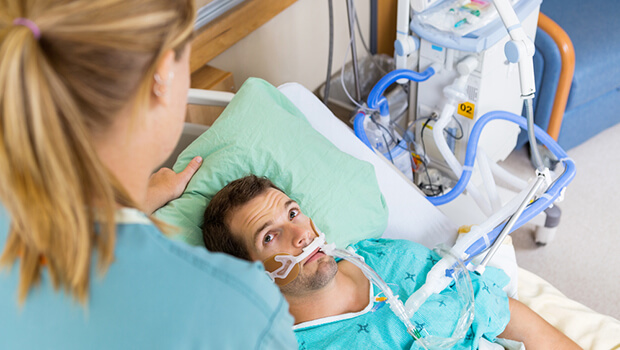
If you have to stay in a hospital, you probably know that your risk of contracting an antibiotic resistant infection is quite high. Part of this increased risk comes from the fact that most people in hospitals have compromised immune systems. But a new study shows the hospital itself might be destroying your immune system.
In this study, researchers analyzed the gut bacteria of ICU patients twice. They looked at their gut bacteria populations just 48 hours after admission and again after 10 days in the ICU (or when the patient was discharged). The researchers also recorded what the patients ate, what treatments they received, and what infections occurred.
They found that there's something very different about the gut bacteria in intensive care unit (ICU) patients than those of healthy patients. They don't have as many. In fact, they have dramatically lower counts of gut bacteria. And the situation worsens the longer they stay in the ICU.
What's worse, they also have higher counts of pathogenic strains of bacteria. This leaves patients vulnerable to hospital-acquired infections that may lead to sepsis, organ failure, and potentially death.
Continued Below...
Why Native Chinese Have Half the Rate of High Blood Pressure as their American Cousins
They use a 5,000-year-old formula that works even when conventional remedies fail. Modern studies show it works!
Click Here To Learn More
As you may know, the good bacteria in your gut helps keep your immune system strong and helps you stay healthy. If the colonies of good bacteria get depleted, your body can't fight infection as well.
While it's possible this depletion of good bacteria occurs because ICU patients often see their health decline. But does their health decline before, after, or during the death of these bacteria? Paul Wischmeyer, an anesthesiologist at the University of Colorado School of Medicine at the time of the study, said that it's often the treatments used in ICU, "including courses of powerful antibiotics, medicines to sustain blood pressure, and lack of nutrition" that cause the depletion. So it's actually the treatments the ICU uses that cause the problem.
Dr. Wischmeyer was surprised by how quickly the bacteria populations changed in the patients. "We saw the rapid rise of organisms clearly associated with disease. In some cases, those organisms became 95% of the entire gut flora — all made up of one pathogenic taxa — within days of admission to the ICU. That was really striking."
Dr. Wischmeyer now runs a lab at Duke University that is looking for nutritional treatments that can improve ICU outcomes. He thinks hospitals should track bacterial populations in their patients just like they do other vital signs. Now that researchers understand how these populations change, Dr. Wischmeyer says, "The next step is to use the data to identify therapies — perhaps including probiotics — to restore a healthy bacterial balance to patients."
He's absolutely right! But don't wait for your hospital to give you probiotics. It won't happen any time soon. Make sure you take a probiotic like Advanced Probiotic Formula with you to the hospital whenever possible. Taking this one simple step could save your life.
Your insider for better health,

Steve Kroening, ND
Sources:
Daniel McDonald, Gail Ackermann, Ludmila Khailova, Christine Baird, Daren Heyland, Rosemary Kozar, Margot Lemieux, Karrie Derenski, Judy King, Christine Vis-Kampen, Rob Knight, Paul E. Wischmeyer. Extreme Dysbiosis of the Microbiome in Critical Illness. mSphere, August 2016 DOI: 10.1128/mSphere.00199-16.